
Finally, the first glimpse of summer arrives: the first lunch outside, the first weekend in the garden. I never much believed in seasonal affective disorder. In fact, I always quite liked London winters, for which I know how to dress, but as I’ve got older, the yearning for spring seems to have intensified. Is this the result of having children? Of standing around in the cold watching youth football? Of getting rained on too many times in some godforsaken playground? Now I find the promise of spring arriving a merry herald of the joys to come.
I hadn’t realised until recently that for some, spring is not a hopeful time, but a melancholy one. AE Housman, that great poet of the Great War generation, saw the annual bloom as a reminder of his mortality. In “Loveliest of Trees” he basks in the glory of the annual cherry blossom only to reflect, mournfully, that he was likely to see only 50 more. “And since to look at things in bloom/Fifty springs are little room,/About the woodlands I will go/To see the cherry hung with snow.”
I’ve loved these lines ever since I stumbled across them while researching my book. When I first read Housman’s A Shropshire Lad, his nostalgic collection of homely poems, it seemed to speak so powerfully to that heroic generation of young men sent to fight for their country. I began thinking of Housman again this week for two separate, though perhaps connected, reasons. The first was the election defeat of Hungary’s Viktor Orbán.
As with Housman’s poetry, I first became familiar with Orbán’s backstory while researching my book. During the Cold War, Orbán had become a key figure in the Hungarian resistance to communist rule, admired by conservative intellectuals like Roger Scruton in the West. When the Berlin Wall came down, a group of Cold Warriors chartered a plane to meet dissident leaders across eastern Europe. The group was led by David Hart, a flamboyant Old Etonian who had helped Margaret Thatcher defeat the miners’ strike in 1985. Hart first headed to Warsaw, then to Prague, and finally to Budapest, where he met a young nationalist called – you guessed it – Viktor Orbán.

Even then, Orbán cut a confounding figure for the conservative cause; not simply a democratic anti-communist, but a mystical Hungarian nationalist. What I find so striking about Orbán’s trajectory since, however, is not so much what it says about human corruptibility – “from man to pig” and all that – but about the journey of Western conservatism, from Cold War libertarianism to more reactionary notions of land, culture, history and homeland.
In 1990, Orbán was a hero for conservative Cold Warriors who saw themselves as being in a civilisational struggle against Soviet totalitarianism. At the heart of this struggle was an idea of “the West”, a free and democratic order stretching across the Atlantic, led by the US. What is left of that order? Ahead of the Hungarian election on 12 April, Donald Trump – the so-called leader of the free world – dispatched his vice-president, JD Vance, to Budapest in an attempt to save Orbán, who is the one-time dissident that became Vladimir Putin’s closest ally in the European Union and fiercest opponent of Ukraine’s ongoing war of resistance against Moscow.
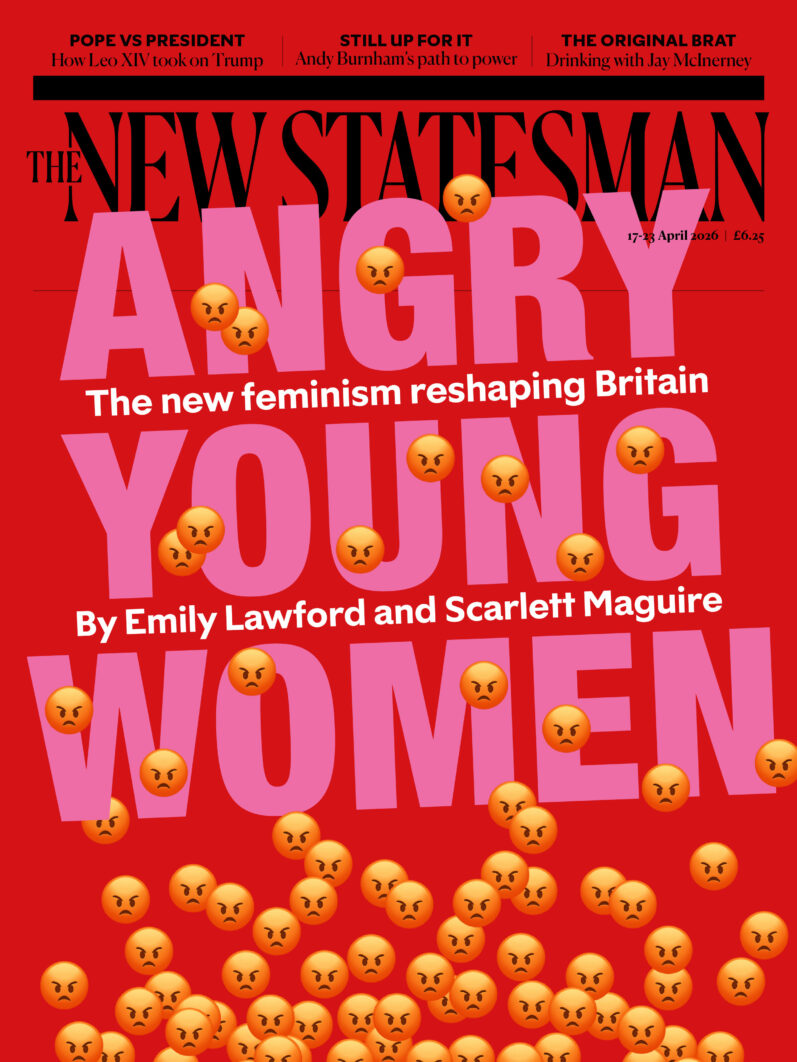
The second reason I began thinking of Housman was this week’s cover package by Emily Lawford and Scarlett Maguire. Their reporting looks at many aspects of young women’s disaffection, but one thing that jumped out at me was the political polarisation between the sexes, each increasingly seemingly operating in different online worlds.
How much of this, I wonder, is young men and women being what they have always been? Aren’t there Housmans in each new generation of young men – romantic and reactionary, obsessed with notions of heroism and history? Housman, after all, was writing his reactionary poetry as a young man in the late-19th century. Enoch Powell became so enthralled by Housman’s work he wrote his own laments about the “sadness of spring”. I am tempted to say young women – today and always – are just less susceptible to such visions (delusions?) of grandeur.
Yet Britain’s young women are no more immune to the feelings of powerlessness and rage at the status quo that drives so much of our politics. We have already heard about how the radicalisation of young men shapes today’s political discourse. But, as our cover story reveals, it would be unwise to ignore the anger among young women, and their demands for more radical, progressive politics.
[Further reading: Meet the Angry Young Women]
Content from our partners



Related


This article appears in the 15 Apr 2026 issue of the New Statesman, Angry Young Women
Join the debate
Subscribe here to comment